


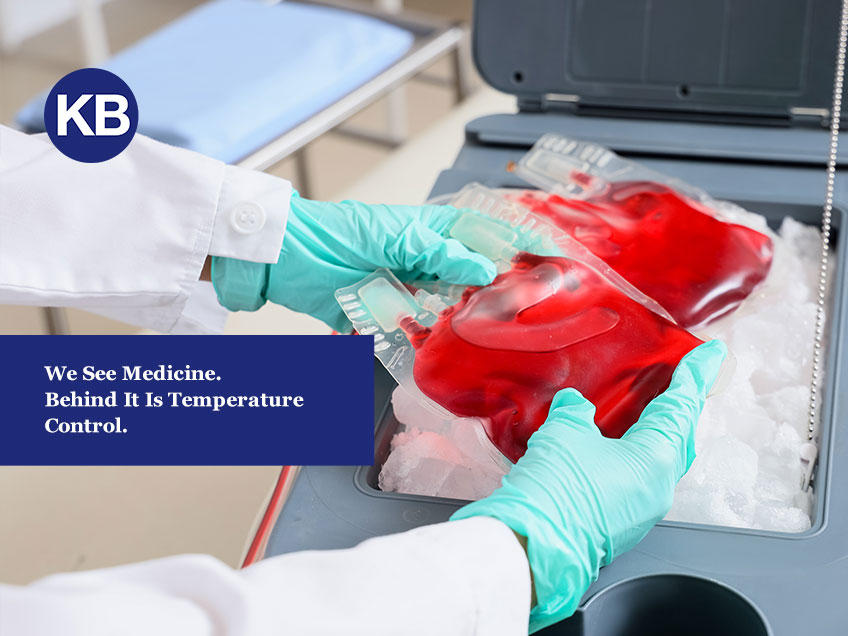
We See Medicine. Behind It Is Temperature Control.
Why controlled temperatures are an invisible part of modern healthcare
A medicine in a pharmacy. A vaccine in a clinic. Blood products in a hospital. Samples in a laboratory.
What we usually see is the final medical product.
What we do not see is the carefully controlled journey behind it — from production and storage to transport and delivery at the point of use.
One factor is critical throughout that journey:
temperature.
In healthcare and pharmaceuticals, refrigeration is far more than a technical requirement in the background. It is part of the infrastructure that helps ensure temperature-sensitive products remain within the conditions defined for their safe storage and transport.
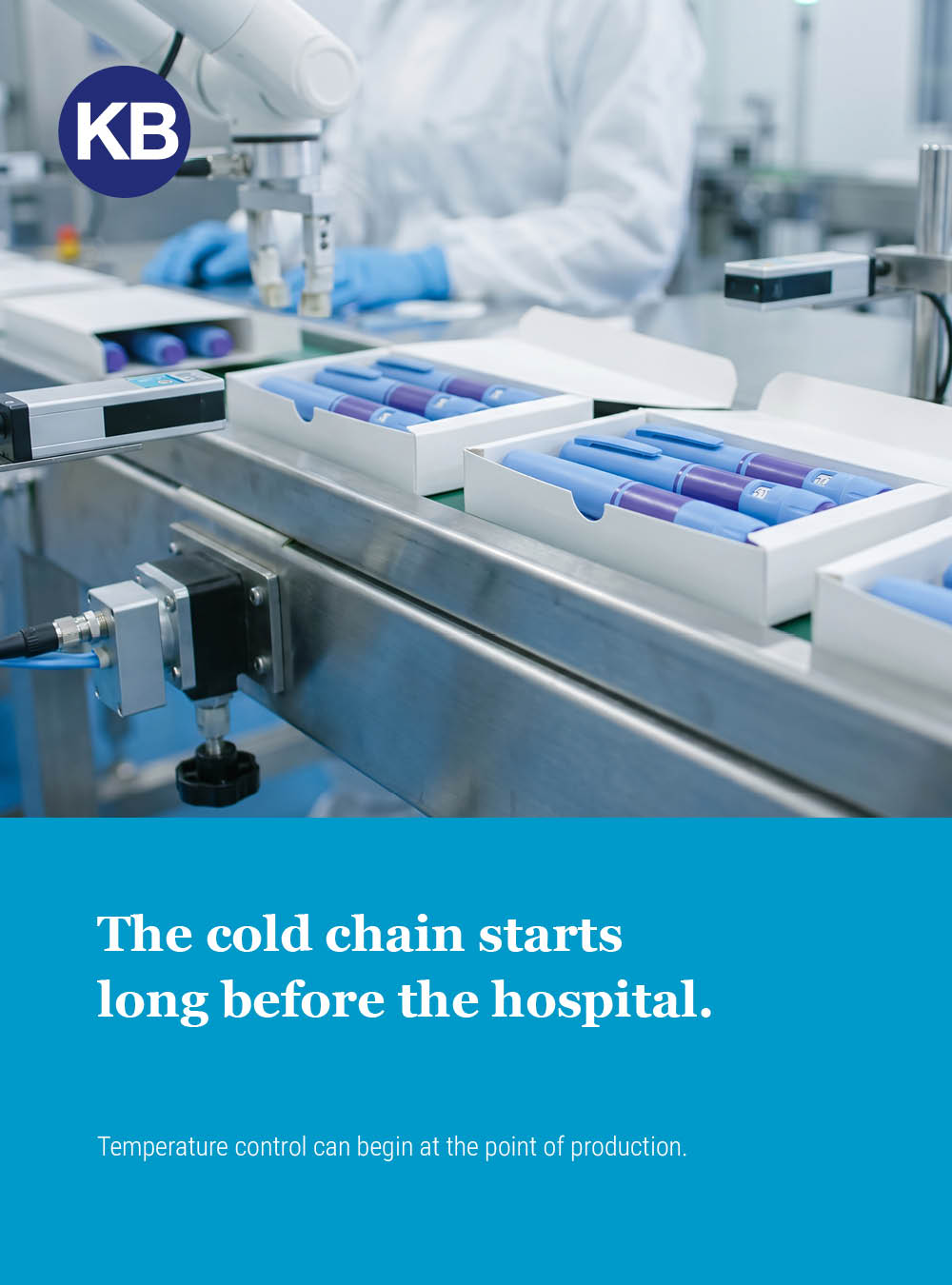
The cold chain starts at production
Medical and pharmaceutical products do not suddenly become temperature-sensitive when they arrive at a hospital or pharmacy.
Temperature requirements can begin during production, processing and storage.
From there, products may pass through pharmaceutical warehouses, distribution centres and specialist transport systems before reaching hospitals, medical practices, pharmacies or laboratories.
The required conditions depend on the product itself.
What matters is not only where a product travels, but also the conditions it experiences along the way.
That is what turns individual stages into a controlled cold chain.
Vaccines make the importance of temperature especially clear
Few examples illustrate the importance of a reliable cold chain as clearly as vaccines.
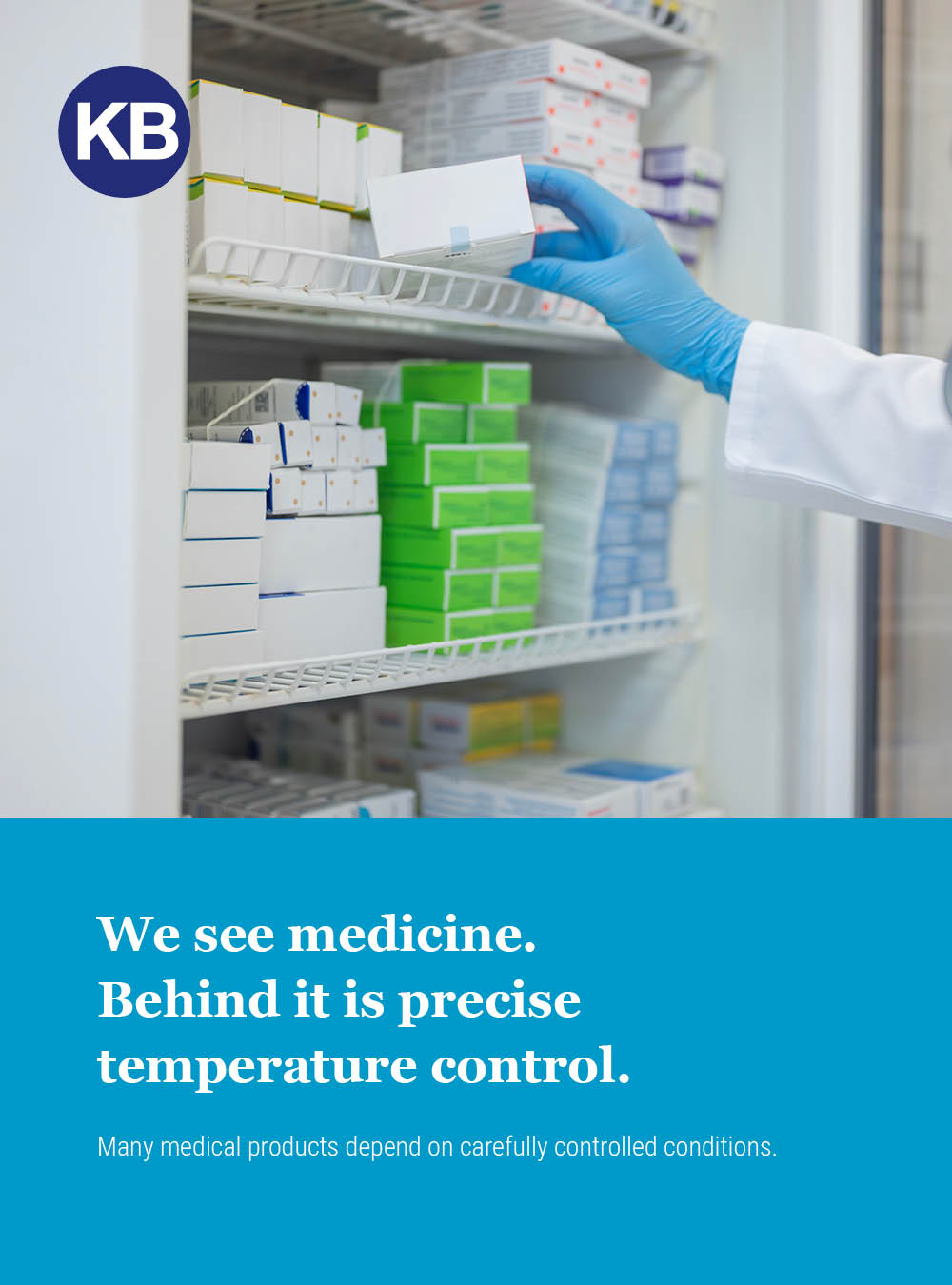
Many vaccines need to be stored and transported within defined temperature ranges. Some remain within conventional refrigerated conditions, while others may require significantly lower temperatures.
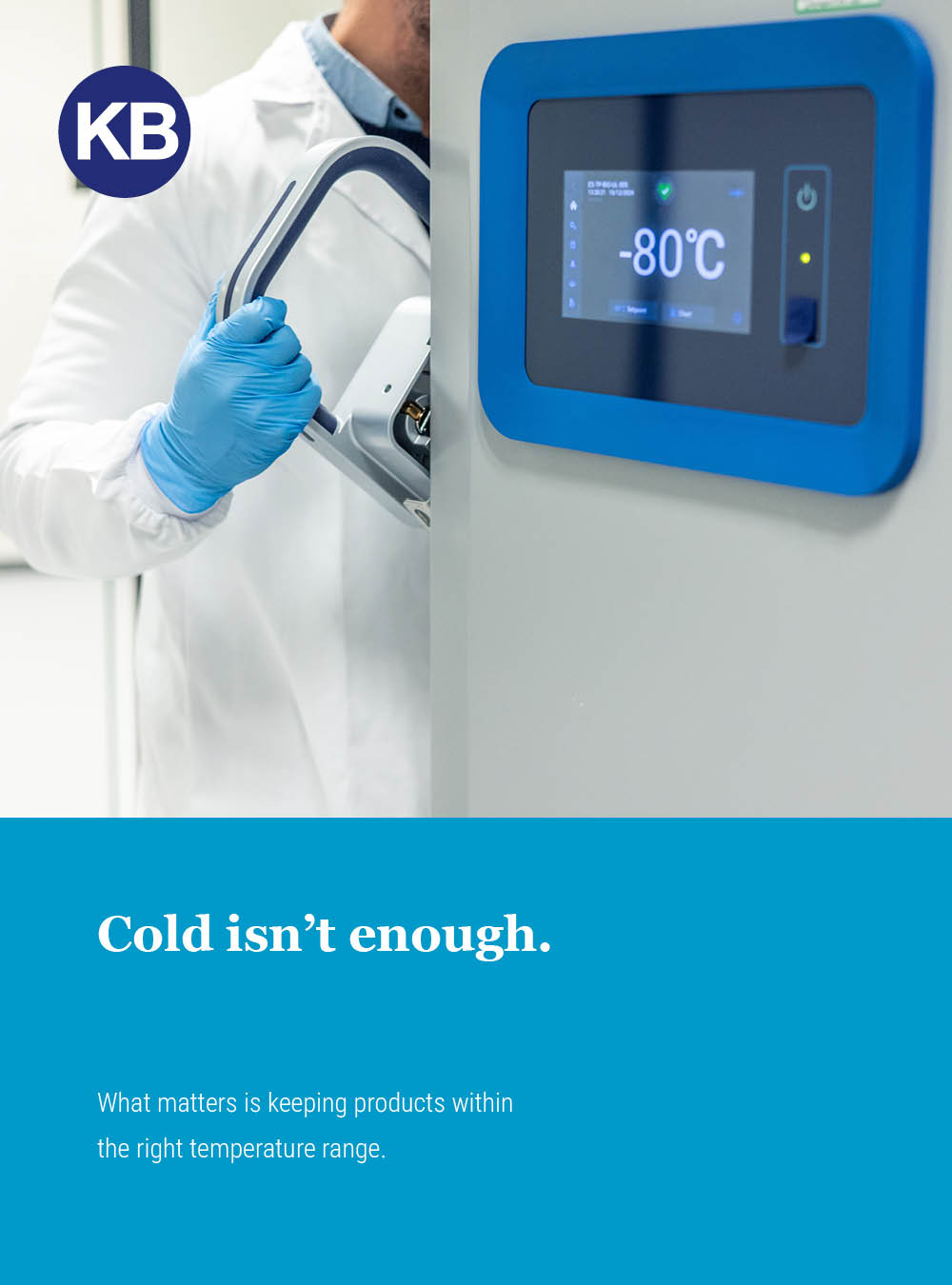
The key point is that refrigeration is not simply about keeping something “cold”.
It is about maintaining the right temperature range reliably.
For some products, temperatures that are too low can be just as problematic as temperatures that are too high.
Temperature control therefore means one thing above all:
keeping the product within the conditions it requires.
Healthcare needs more than a refrigerator
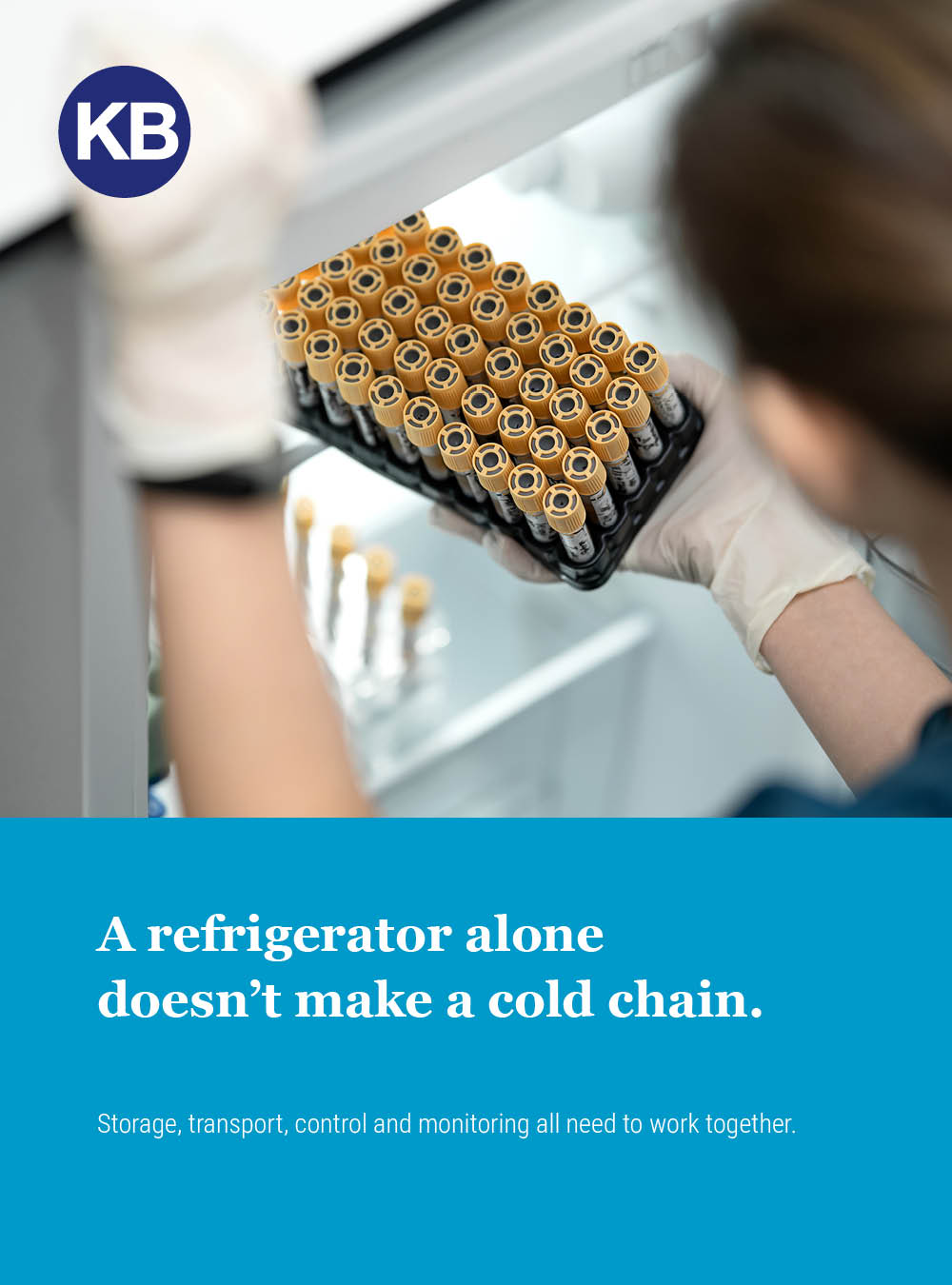
A medical cold chain is not built around a single appliance.
It can involve manufacturers, storage facilities, refrigerated transport, cold rooms, specialist packaging, medical refrigerators and monitoring systems.
Sensors, data loggers and other monitoring technologies may also form part of that infrastructure.
The important point is not the refrigeration unit alone.
It is how the entire system works together.
Storage, transport, control, monitoring and documentation all need to interact if defined conditions are to be maintained throughout the chain.
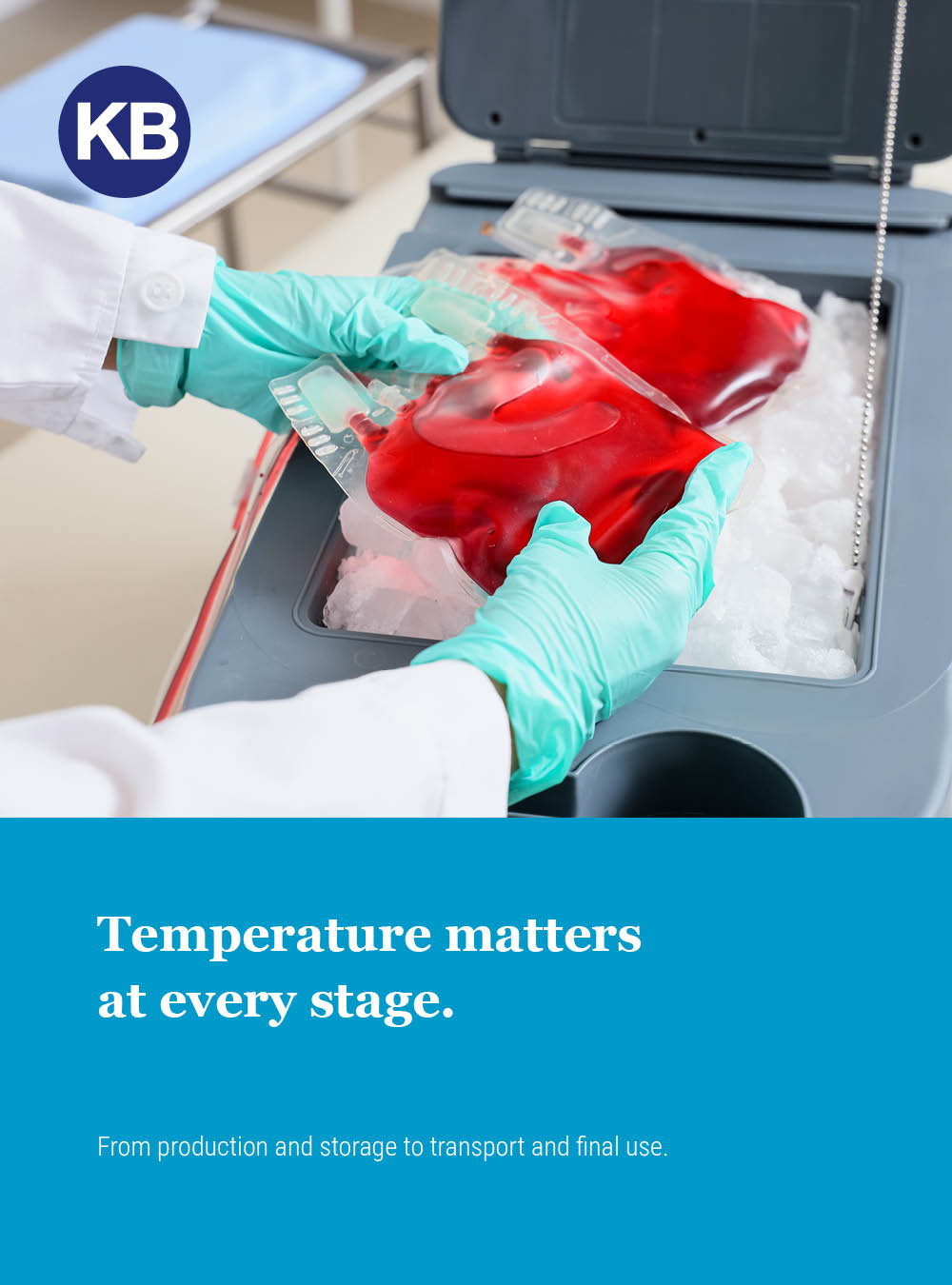
Blood and blood products require tightly controlled conditions too
Another clear example can be found in hospitals and transfusion medicine.
Blood and blood components must be stored and transported under defined conditions, depending on the product.
While some blood products are kept within conventional refrigerated temperature ranges, frozen plasma places significantly higher demands on refrigeration systems.
Depending on the product, storage concept and medical application, temperatures can extend down to around –40 °C.
At that point, the challenge is no longer simply refrigeration.
It becomes a question of maintaining stable deep-freeze conditions over time.
Temperatures need to be maintained, monitored and documented reliably. At the same time, the system has to account for what happens if part of the refrigeration equipment fails.
With sensitive products, an unacceptable rise in temperature can affect whether they remain suitable for use.
-

- Refrigeration for Healthcare & Pharma | KB KälteBeratung
-
- Refrigeration for Healthcare & Pharma | KB KälteBeratung
-
- Refrigeration for Healthcare & Pharma | KB KälteBeratung
-
- Refrigeration for Healthcare & Pharma | KB KälteBeratung
Temperature must be monitored, not just maintained
A functioning cold chain therefore involves more than generating cooling.
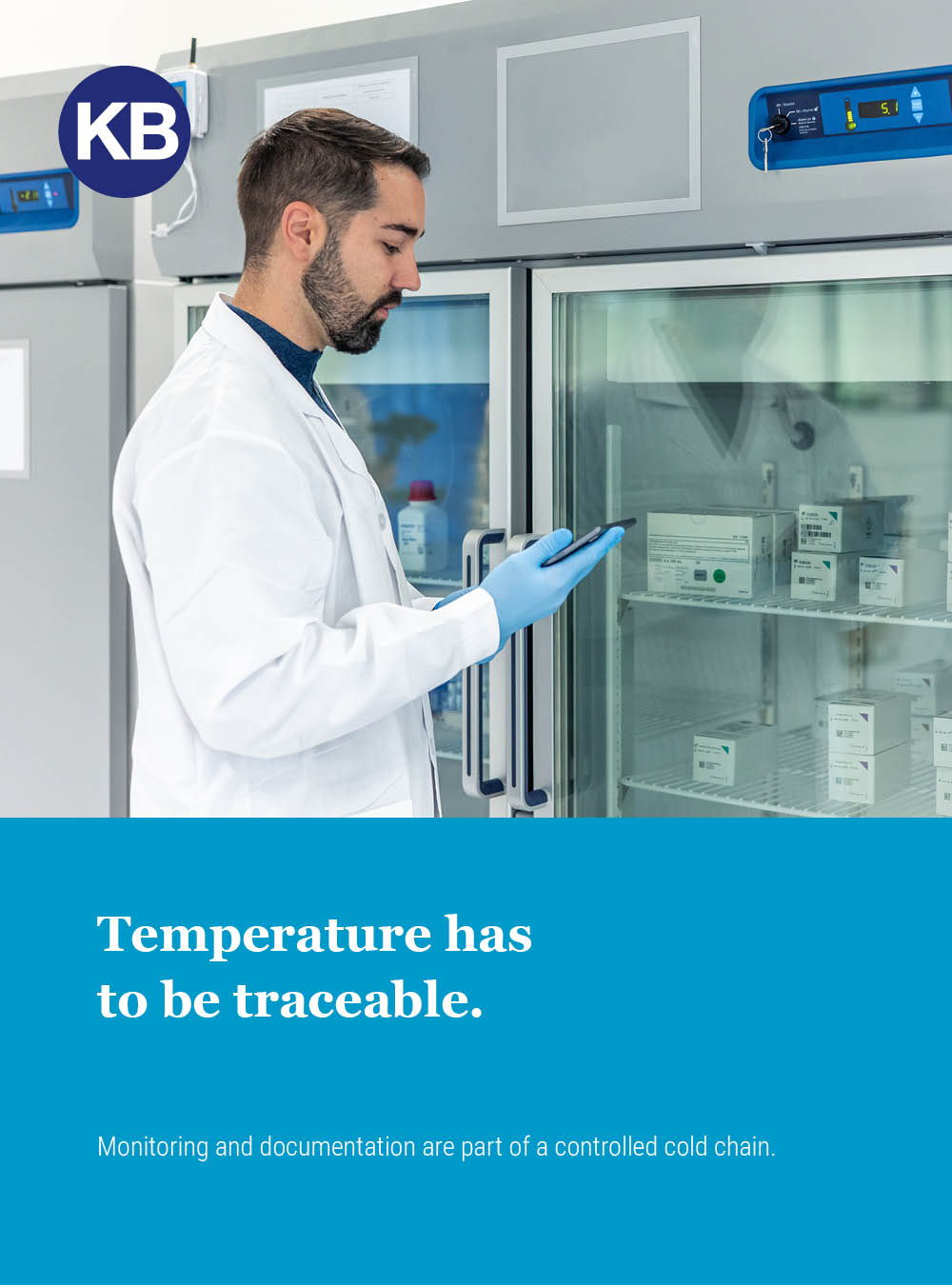
Temperatures need to be measured, monitored and documented. Deviations have to be detected early and assessed.
Refrigeration becomes an integrated system of:
cooling, distribution, control, monitoring and documentation.
Only when these elements work together can conditions remain controlled and traceable.
In medical and pharmaceutical applications, the question is therefore not simply whether the required temperature can be reached.
The real question is whether it can be maintained reliably — and demonstrated to have been maintained.
Reliability has to be designed into the system
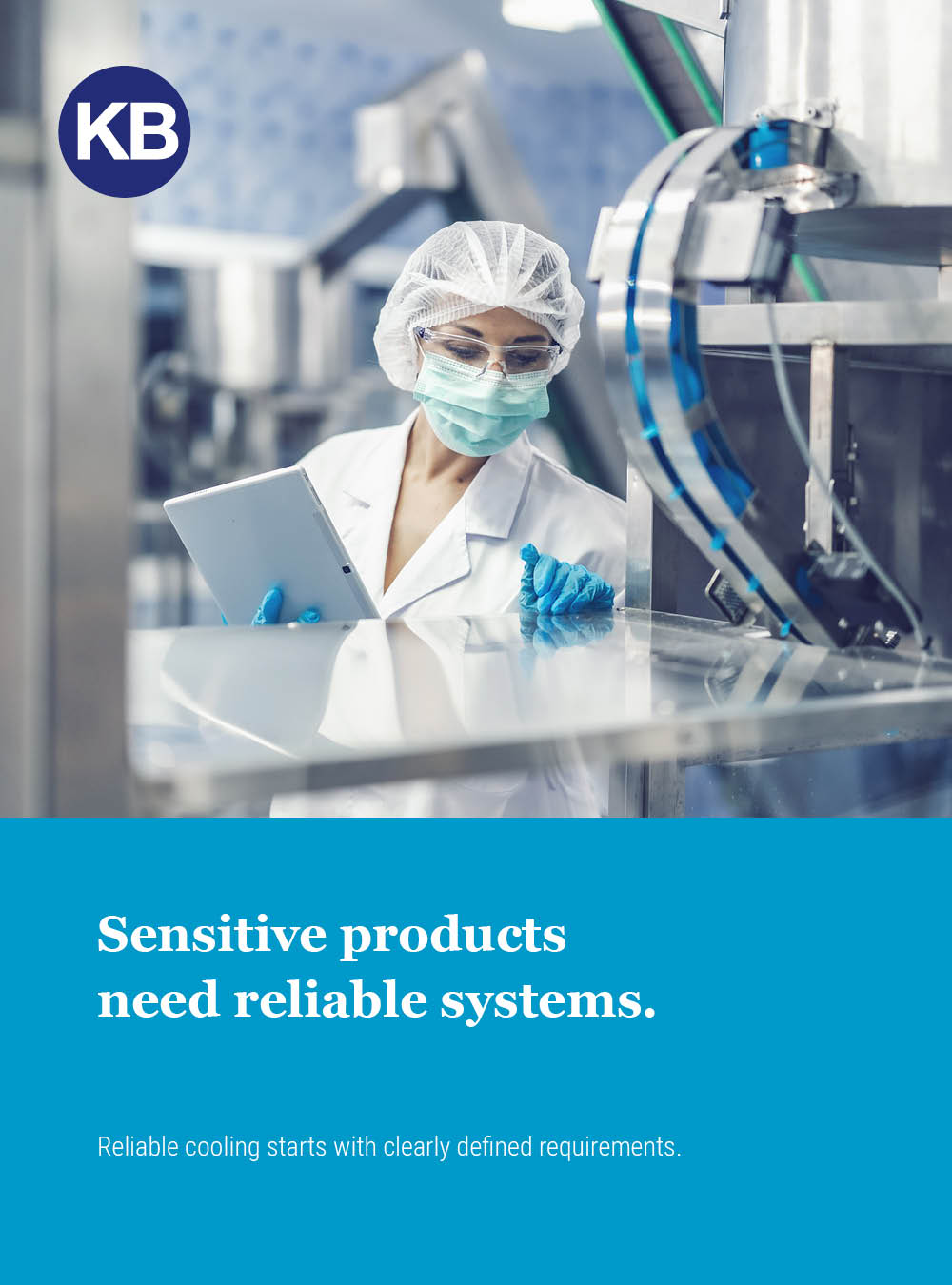
In sensitive healthcare environments, refrigeration systems cannot be designed solely around normal operating conditions.
The question of what happens in the event of a technical failure must also be considered from the outset.
For deep-frozen blood plasma, for example, the system must prevent stored products from warming beyond acceptable limits if part of the refrigeration equipment fails.
Depending on the application, risk assessment and required level of security, this may involve redundant refrigeration systems.
In practical terms, that could mean two systems or units designed so that a second one can maintain the required cooling capacity if the primary system becomes unavailable.
An emergency power supply for critical components may also form part of the concept.
Monitoring and alarm systems are equally important, ensuring that deviations or failures are detected quickly.
How redundancy, backup power and monitoring are configured will always depend on the site, the application and the defined safety requirements.
Reliable refrigeration is therefore not only about achieving the required temperature — it is also about maintaining it when individual components fail.
Energy efficiency still matters
Reliability and energy efficiency are not opposing goals.
Refrigeration systems can operate for many hours throughout the year. System sizing, controls, operating strategy and the interaction between different loads can therefore have a major impact on overall efficiency.
Good planning looks beyond the maximum cooling demand.
It considers how the system performs across a wide range of operating conditions.
Where technically and economically appropriate, heat recovery and broader energy concepts may also be part of the solution.
The challenge is to think about safety, reliability and energy efficiency as one integrated system.
-
- Refrigeration for Healthcare & Pharma | KB KälteBeratung
-
- Refrigeration for Healthcare & Pharma | KB KälteBeratung
-
- Refrigeration for Healthcare & Pharma | KB KälteBeratung
-
- Refrigeration for Healthcare & Pharma | KB KälteBeratung

From medicine back to the technology behind it
When we receive a medicine, we rarely think about the temperatures under which it was previously stored.
When we are vaccinated, we do not see the cold rooms, transport containers or monitoring systems that were part of the process.
And when we are treated in a hospital, we rarely see the technical infrastructure operating behind the scenes.
That is something healthcare refrigeration has in common with many other areas of modern cooling technology:
When it works reliably, it remains largely invisible.
Behind that apparent simplicity are technical systems, defined requirements and careful planning.
We see medicine. Behind it is temperature control.
And behind reliable temperature control is a carefully engineered system.
